
The Sun Magazine
- Dec 19, 2024
- 9 min read
Updated: Nov 15, 2025
The Sun Magazine has built a reputation for publishing unvarnished personal essays, fiction, and poetry that privilege clarity over artifice. Its editorial practices, compensation model, and ad-free structure have created an uncommon space where emerging and established writers receive rigorous attention and meaningful support. Through fellowships, annual awards, and a submission process rooted in openness and care, The Sun continues to shape a literary community defined by sincerity, craft, and a commitment to voices often sidelined in mainstream publishing.


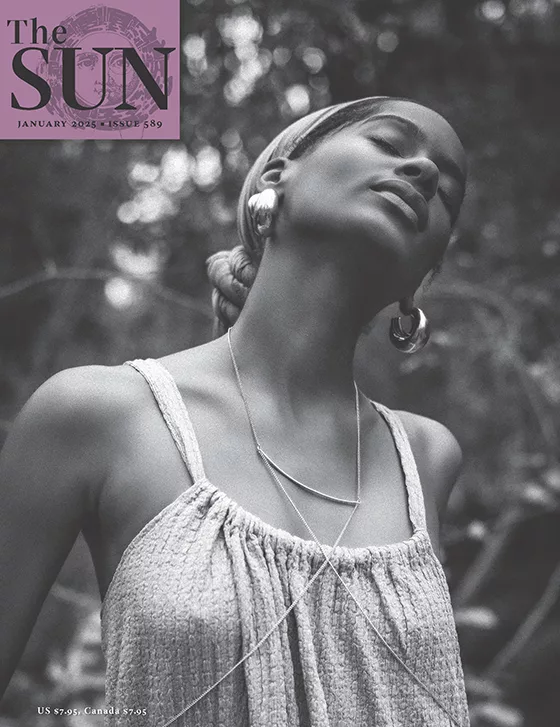
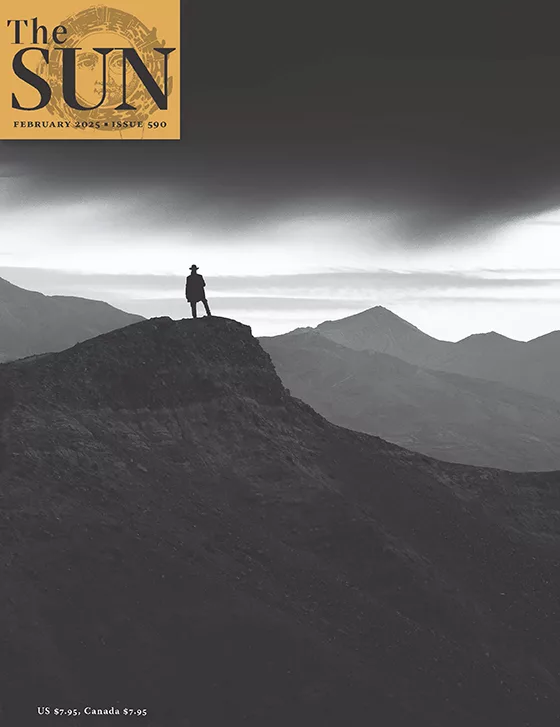
The magazine began in 1974 when founder Sy Safransky and co-founder Mike Mathers borrowed only $50, printed the first issue on a copy machine, charged 25 cents, and gave away the misprinted copies for free. Magazine covers courtesy of The Sun Magazine.
The Sun Magazine began in 1974 as a stapled, ad-free experiment in Chapel Hill, built on the belief that unvarnished personal writing could cut through noise and reach people on a human level. That belief still shapes every issue. The magazine’s essays, interviews, fiction, and poetry are chosen for their precision, candor, and the willingness of the writer to examine a life without performance. The Sun gravitates toward work that captures unease, contradiction, small revelations, and the private negotiations that rarely appear in public narratives.
The magazine’s editorial vision is inseparable from its commitment to who gets published. It has long sought out voices who have been excluded from commercial publishing: writers of color whose work resists tokenism, queer and trans writers writing toward their own realities rather than market expectations, writers living with disability, incarcerated writers confronting systems that confine both body and language, and anyone whose experience has been discounted or misread by mainstream literary outlets. The Sun does not frame these contributors as exceptions; it treats their perspectives as central to the magazine’s purpose.
Because it publishes without advertising, the magazine sustains itself entirely through readers and uses that independence to protect the integrity of the work it prints. Its editorial process centers on slow reading, deep revision, and a respect for idiosyncratic voice. Its signature “Readers Write” section builds community by inviting thousands of unsolicited personal stories each year, creating an archive of lived experience that is distinct in contemporary publishing.
The Sun’s belief in writing as a consequential force shows up not in slogans but in practice: long-form interviews that give thinkers room to challenge accepted narratives; fellowships that provide time, funding, and editorial support to emerging writers; and annual contests that uncover work from writers with no prior publication history. The magazine treats literature as a meeting place—one where readers and writers encounter each other with sincerity, curiosity, and the expectation that truth, when written well, can create genuine connection.
Accolades and Recognition
Recognition for work published in The Sun reflects the magazine’s long commitment to nurturing writing that endures. Pieces first printed in its ad-free pages have been reprinted in major annual anthologies such as Best American Essays, Best American Short Stories, Best American Poetry, and Best American Science Fiction and Fantasy. These reprints trace a clear pattern: writers who debut in The Sun often produce work that resonates well beyond the magazine’s readership.
The Sun’s contributors have earned the Pushcart Prize and the PEN Robert J. Dau Short Story Prize for Emerging Writers, honors that signal both artistic merit and the magazine’s role in identifying exceptional voices early in their careers. Many writers published in The Sun describe the experience as a turning point, a moment when a deeply personal essay or story found the kind of editorial care and national attention that allowed their work to reach a wider literary community.
Across awards, reprints, and long-term career trajectories, the magazine’s influence is measurable. Work that begins in its pages consistently enters broader cultural and critical conversations, reinforcing The Sun’s reputation as a publication that recognizes significant writing before the rest of the field has caught up.
What They Publish
The Sun’s publishing philosophy grew out of the same principles that shaped its earliest issues in the mid-1970s: an insistence on sincerity, a distrust of artifice, and an unwavering belief that ordinary lives contain extraordinary material when examined with honesty. Every month, the editors sift through an enormous volume of unsolicited work, searching for writing that feels lived rather than constructed and that holds emotional risk on the page. Because the magazine remains entirely ad-free, its choices reflect only the quality of the work and the depth of the voice behind it.
Contributor payments reflect this respect. The Sun has long been one of the few independent literary magazines to offer meaningful compensation: nonfiction payments often fall between $300 and $2,000, depending on length and editorial scope, fiction between $300 and $1,500, and poetry between $100 and $250. Even brief pieces receive guaranteed payment, a practice rooted in the magazine’s belief that a writer’s labor is not incidental to the publication’s mission.
Essays
The magazine’s nonfiction has become its signature for a reason. The Sun is known for publishing the kinds of essays writers once assumed would be unpublishable: pieces written in the aftermath of rupture or regret; examinations of family dynamics that resist tidy conclusions; revelations the writer took years to articulate. Editors respond to work that carries the weight of lived experience without slipping into confession for its own sake. They look for essays that maintain both clarity and vulnerability, pieces that move through ambivalence, emotional consequences, and the hard work of self-reckoning. The strongest essays feel as though the writer had to write them, and the reader is meant to encounter them.
Fiction
Fiction in The Sun tends to be quiet on the surface but charged below it. Its stories often follow ordinary characters caught in moments when the familiar world shifts, even slightly: a parent on the edge of resignation, a stranger arriving at the wrong moment, a small choice that exposes something irrevocable. Whether the piece leans toward humor, grief, or the uncanny, the editors look for stories that refuse easy emotional shortcuts and that leave the reader with an aftertaste—a sense that something essential has been revealed. The Sun has always welcomed genre-bending work, but only when the speculative or surreal elements deepen the human stakes rather than distract from them.
Poetry
The magazine’s poetry shares the same aesthetic spine as its prose. The editors gravitate toward poems that read with the clarity of a lived moment, whether that be a childhood memory rendered without sentiment, a private grief condensed to a few spare lines, or an insight that arrives in the middle of it all. The poems published in The Sun rarely rely on abstraction; instead, they move through image, memory, and emotional consequence with a deliberate directness. Readers often describe these poems as deceptively simple, work that opens slowly, then stays with them for days.
Across every genre, the magazine’s aim is steady. It publishes writing that feels necessary, that reflects the complexity of being human, and that retains its force long after the issue has been tucked away on a shelf. That consistency is what has made The Sun a platform where both emerging and established writers entrust their most personal, difficult, or quietly profound work.
Submission Guidelines
The magazine's submission process reflects the same values that shape its pages: openness, clarity, and respect for writers. The magazine accepts work in English from anywhere in the world, and its editors read every submission themselves rather than having interns or automated systems filter them. While most published pieces fall under 7,000 words, the editors do not impose hard limits; they would rather read something necessary at its natural length than something trimmed to fit an artificial constraint. Poets may submit up to five poems in a single file, consistent with the magazine’s preference to read a small constellation of a poet’s work at once.
The Sun does not demand elaborate formatting. A standard 12-point font, double spacing for prose, and one-inch margins are all that is needed. Writers are asked to include their name, title, and genre on the first page, but the magazine has never rejected—or even quietly penalized—anyone for minor formatting inconsistencies. The focus is on the writing, not the template it arrives in.
Most submissions arrive through Submittable, with a modest $2.50 processing fee that helps offset the administrative costs of reviewing thousands of unsolicited manuscripts each year. Writers who prefer not to submit online may mail printed work to the editorial office in Chapel Hill at 109 N. Roberson Street. Mailed submissions carry no fee, though writers must include a self-addressed, stamped envelope if they want a reply. True to its long-standing practice, The Sun does not return physical manuscripts.
Simultaneous submissions are welcome, as the magazine recognizes the practical realities of a writer’s life. If a piece is accepted elsewhere, the editors simply ask for prompt notification so they may release it back into circulation for another writer.
Response times average around three months, though the volume of submissions—especially during periods of heightened visibility—can extend that window. Delays are not an indication of disinterest; they are a reflection of the magazine’s insistence on reading with care.
Contributors are paid upon publication, typically through PayPal or direct deposit. The Sun purchases one-time print and online rights, allowing writers to retain control of their work after it appears in the magazine. This rights structure has allowed many pieces to be reprinted in anthologies, academic readers, and collections long after their first appearance—another way the magazine honors the labor and longevity of the writing it publishes.
Annual Competitions and Awards
The Sun’s annual competitions grew out of the magazine’s early years, when it operated on a shoestring budget in Chapel Hill and relied on readers who believed that honest writing could change the texture of public conversation. Even as the magazine’s circulation expanded, its awards remained rooted in the same principle: find work that might not surface elsewhere, nurture it with serious editorial attention, and give writers material support in a field where compensation is often symbolic at best.
Emerging Writer Award
This award was created to spotlight writers who show early mastery of the qualities The Sun values most: precision, emotional courage, and the ability to articulate experience without theatrics. Winners receive $1,000, publication in the magazine, and a long-form interview that situates their work within their life, process, and influences. The interview is not ceremonial; it is an extension of the magazine’s commitment to treating new voices with the same seriousness it gives to its most established contributors. Many past recipients say the award marked the first time an editor treated their work as part of a lasting literary conversation.
Writing Fellowship
The fellowship reflects The Sun’s belief that sustained editorial partnership can change the course of a writer’s career. Recipients receive a $2,500 stipend and months of one-on-one mentorship with an editor—an experience more akin to apprenticeship than simple manuscript review. The fellowship guarantees publication of at least one piece, but in practice, fellows often publish multiple works or develop longer projects that continue long after the fellowship ends. This program embodies the magazine’s oldest value: the belief that patient, attentive editing can draw out a writer’s best work.
Best of The Sun Anthology Series
The anthology series functions as both record and ritual. Each year, editors revisit the full run of issues, selecting the pieces that defined the magazine’s voice that year. Contributors receive $500 per piece, but the value often extends further: inclusion in the anthology places a writer’s work alongside decades of pieces that have shaped The Sun’s reputation. For many long-time subscribers, the anthology is an annual time capsule—a curated ledger of the writing that most resonated in a given year, independent of trend or market.
Reader’s Choice Award
This award underscores the reciprocal relationship between the magazine and its readers, who have supported its ad-free model for half a century. Subscribers vote on the piece that struck the deepest chord, the one they returned to or shared with others. The winning writer receives $1,000 and a detailed feature exploring why their work carried such force for the community. Because readers of The Sun tend to have long-standing, deeply personal relationships with the magazine, this recognition often feels distinct from critical acclaim; it reflects the impact of one piece on a readership that treats the magazine not as a product but as part of their interior life.
Together, these awards reflect The Sun’s approach to literary stewardship: find the work that matters, invest time and resources in the person who wrote it, and build structures that allow powerful writing to endure long after its first appearance on the page.
The Future of The Sun Magazine
The Sun’s approach to submissions is shaped by the same straightforward, writer-centered philosophy that guides the rest of the magazine. The editors do not review queries or pitches; they rely on complete manuscripts because they want to see how a writer carries an idea all the way through, not how they intend to. This practice has been in place for decades and reflects the magazine’s preference for fully realized work rather than conceptual outlines.
Writers who submit online through Submittable can track the status of their manuscripts directly through the platform, which remains the only method for receiving updates. Mailed submissions—still welcomed by the magazine—cannot be tracked, a practice that dates back to the print-only era when The Sun operated from a single room in Chapel Hill and responded to every writer by hand.
If a writer needs to withdraw a submission, the editors ask that they do so through Submittable. Poets may withdraw a single poem from a multi-poem packet without removing the entire submission, a small but intentional accommodation for the realities of simultaneous submissions.
These guidelines exist to keep the process as fair, transparent, and manageable as possible, for a magazine can read every submission with care. Writers who send work to The Sun join a long tradition of contributors who have helped shape the magazine’s voice over five decades. The editors continue to welcome new work from anyone willing to put an honest piece of writing on the page.