
Beloit Poetry Journal
- Nov 30, 2025
- 6 min read
Updated: Dec 11, 2025
Beloit Poetry Journal has maintained a consistent presence in American poetry for more than seventy years through an editorial approach defined by close reading, deliberate selection, and a willingness to publish work that exceeds the limits of conventional form. Its history, submission practices, awards programs, and long record of publishing influential poets reveal a clear editorial identity grounded in precision and seriousness. The journal continues to serve as a reliable point of entry for emerging writers and a credible venue for established poets working outside commercial expectations, offering a standard of evaluation that has remained steady as the broader field has expanded and fragmented.

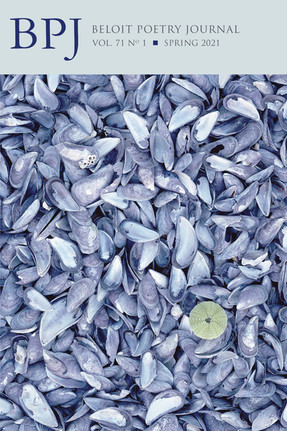


Since its founding in 1950, the Beloit Poetry Journal has held a distinct place in American poetry as a publication willing to take on work that other journals often avoid. It began at Beloit College and later became an independent nonprofit, guided by an editorial philosophy that favors clarity, structural intention, and work that tests the limits of form. BPJ is known for publishing long poems, unconventional architecture, hybrid modes, and writing that relies on the strength of the line rather than surface ornamentation.
The journal’s editorial process reflects that commitment. Senior editors first review each submission. Work that merits further attention is then brought to an editorial board that reads the poems aloud and examines them with close attention to line, movement, and internal logic. These meetings are deliberate and steady. They keep the selection process anchored to the quality of the work itself rather than to external pressures or short-lived aesthetic preferences. Poems are published because they hold up under close reading and demonstrate control, not because they echo what is currently circulating elsewhere.
Submission Practices and Publication Rhythm
BPJ releases three issues each year and reads new work during two open periods, in January and July. The journal considers a wide range of styles but requires that all submissions be previously unpublished and presented with clear intention. Simultaneous submissions are permitted with timely withdrawal, and the journal does not accept reprints.
Its guidelines are straightforward but exacting. BPJ is one of the few long-standing journals that actively welcomes long poems, extended sequences, hybrid structures, and work that does not conform to familiar formats. Conventional forms are also considered, but only when the execution demonstrates clarity, control, and purpose. The policy is stable and transparent. BPJ selects work because it holds up on the page, not because it mirrors a seasonal preference or a circulating style.
Influence and Contribution to the Field
Across more than seventy years, BPJ has published writers whose work has left a measurable mark on American poetry, including Galway Kinnell, Charles Bukowski, Sharon Olds, and others whose careers reshaped the field. Appearance in BPJ signals that a poem has moved through one of the most demanding editorial processes available to poets today and stands up to close, deliberate reading. That distinction carries weight on a writer’s record.
The journal’s impact extends into the broader ecosystem. BPJ remains a first point of recognition for emerging poets whose work exceeds the limits of narrower venues, and it continues to provide space for established writers working in forms or modes that require a level of attention many publications cannot sustain. For many poets, publication in BPJ marks the moment their work is noticed by editors, magazine staff, and agents who follow journals that maintain consistent editorial standards.
Sharon Olds
Sharon Olds’s early publication in Beloit Poetry Journal is consistent with the journal’s commitment to work that is both formally deliberate and unflinching in its subject matter. Olds later established herself as one of the most influential poets of her generation, winning the Pulitzer Prize for Stag’s Leap and earning wide recognition for poems that combine intimate personal detail with precise craft. Her career has included contributions to major journals, leadership of NYU’s Graduate Creative Writing Program, and an expansive body of work widely taught across universities. BPJ’s early support reflects its editorial instinct for writers who will go on to reshape the field.
Charles Bukowski
Charles Bukowski’s work appeared in Beloit Poetry Journal during the period when his writing was gaining national attention for its unvarnished directness and refusal to conform to established literary modes. BPJ’s willingness to publish his early work mirrors its long editorial history of recognizing voices that operate outside mainstream expectations. Bukowski went on to become one of the most widely read poets of the 20th century, with a body of work that includes collections, novels, and columns that shaped the cultural understanding of working-class American life. His early presence in BPJ underscores the journal’s role in identifying writers whose work would later exert significant cultural influence.
Galway Kinnell
Galway Kinnell’s early appearance in Beloit Poetry Journal reflected the journal’s long-standing recognition of work grounded in clarity, precision, and emotional force. Kinnell went on to become one of the central figures in American poetry, earning both the Pulitzer Prize and the National Book Award for Selected Poems. His career spanned decades, marked by a direct, elemental voice and an ability to write with equal command about interior landscapes and the physical world. His publication in BPJ sits within the early arc of a career that later shaped the teaching, practice, and public understanding of American poetry.
Awards and Chapbook Programs
BPJ maintains two programs that extend its editorial work beyond the magazine itself. Both reinforce the journal’s commitment to publishing work that stands on the strength of its craft rather than on its proximity to current preference or market language.
Adrienne Rich Award for Poetry
The Adrienne Rich Award recognizes a single poem each year and is judged by an established poet whose perspective brings a distinct critical rigor to the process. The award includes $1,500 and publication in BPJ. The reading period typically runs from February through April. Because the award is decided by a rotating judge rather than by committee consensus, the selection tends to highlight work that carries a clear, deliberate voice, independent of style or school. For many poets, it becomes a meaningful line in the record because the poem has earned the attention of both BPJ and a respected contemporary writer.
Chad Walsh Chapbook Series
The Chad Walsh Chapbook Series focuses on work that needs more space than a magazine issue can provide. The series is open to all poets writing in English, and the winning manuscript receives $2,500, fifty author copies, a print run of roughly 1,500 copies, and a full editorial consultation with BPJ staff. The chapbook is distributed to every BPJ subscriber and also sold separately. Every manuscript is read by BPJ editors, and the selection process mirrors the journal’s standard practice: a close reading of the work as a whole, its internal structure, and the choices that shape its movement from beginning to end.
Both programs expand the ways BPJ supports poets while remaining consistent with the journal’s editorial approach. They provide additional forms—single-poem recognition and chapbook-length publication—through which BPJ can identify and promote work that warrants sustained attention.
BPJ’s Role for Contemporary Writers
For poets working in a period defined by high output and uneven editorial practice, Beloit Poetry Journal functions as a fixed point of reference. The scale of publishing in the United States has increased sharply; more than 2.6 million books were self-published last year, and hundreds of new literary magazines appear and disappear each year. In a field where many venues rely on rapid editorial turnaround or algorithmic visibility, BPJ maintains a slower, more deliberate process. Its editorial values have not shifted with changes in taste or market pressures, and that stability matters.
For emerging poets, BPJ offers a credible first step into the national record. Publication signals that the work has been read closely, discussed, and selected through a process that prioritizes attention over volume. In an industry where many early publications are treated as provisional, BPJ remains one of the few journals whose acceptance immediately strengthens a writer’s submission record, grant applications, and future prospects with editors and agents who track long-standing venues.
For established writers, BPJ remains a space where the work can take on forms that many magazines cannot accommodate, including extended sequences, hybrid structures, or poems that require sustained attention. Its editorial approach allows writers to work outside commercial expectations without sacrificing the publication's seriousness.
Appearing in BPJ places a poet within a lineage shaped by writers whose work has influenced American poetry for more than seventy years. In a landscape dominated by speed and scale, BPJ continues to offer something rare: a consistent editorial standard backed by history, a space where the work is examined on its own terms, and a publication record that has held its weight across generations.


Comments